One day is not enough for Mumbai. But one day done well beats three days spent stuck in traffic between the wrong places, and most visitors get this wrong in the same way: they pick sights from a list without looking at where those sights actually are.
Here is how we would spend a single day, written by guides who make this run regularly.
The one thing to understand first
Mumbai is long and thin. It was seven islands, joined by landfill under the British, and the result is a peninsula where nearly everything historic sits at the southern tip while most people live to the north.
Crossing the city can take ninety minutes in traffic. Crossing it twice wastes a third of your day. Pick one zone and work through it in order. For a single day, that zone is South Mumbai plus one stop on the way.
7:00am, start at the Gateway of India
Go early. By ten the crowds and the touts arrive, and the light is harsh. At seven it is quiet enough to actually look at it.
The Gateway of India was completed in 1924 to commemorate a royal visit that had happened thirteen years earlier. Twenty-four years later, the last British troops to leave India marched out through it. There is something fitting about that.
Behind you is the Taj Mahal Palace, built in 1903 by Jamsetji Tata. Walk into the lobby if you are dressed for it. Nobody minds.
8:00am, the Fort district on foot
This is the part most day trips skip, and it is the best walking in the city.
Head north past the Bombay High Court and the University of Mumbai with its Rajabai Clock Tower, all looking out over the Oval Maidan where cricket has been played for over a century. On the far side of the maidan is one of the world’s largest collections of Art Deco buildings, second only to Miami Beach.
Both ensembles are UNESCO World Heritage listed, together, because the contrast between them is the point.
Continue to Flora Fountain, then St Thomas Cathedral, the oldest English building still standing in Mumbai, and Horniman Circle with its colonnade around the gardens.
10:00am, Chhatrapati Shivaji Maharaj Terminus
Still called VT by most people. It is a working railway station handling around three million passengers a day, and it is also, in our view, the most impressive building in India after the obvious one in Agra.
Look at the detail: stone carvings of Indian animals and plants worked into a Victorian Gothic frame. It was designed by a British architect and built largely by Indian craftsmen, and you can see both hands in it.
11:00am, Crawford Market and the bazaars
A ten-minute walk north. Crawford Market for fruit, spices and the wholesale lanes behind it. Then into the older bazaars: Zaveri Bazaar for gold, Bhuleshwar for flowers and brass.
This is where a day trip stops being a monument tour and starts being Mumbai. It is loud, crowded and completely unbothered by your presence.
1:00pm, lunch
Eat locally rather than heading back to a hotel. Britannia & Co near Ballard Estate for Parsi berry pulao. Kyani & Co or a similar Irani cafe for something simpler. Or a thali anywhere near the markets for a few hundred rupees.
2:30pm, Dharavi
If you only have one day, this is what we would tell you not to skip.
Dharavi is roughly a square mile with around a million residents and an economy estimated at a billion dollars a year. Plastic recycling, potteries, leather, textiles, bakeries. It is a working district, not a spectacle, and two hours there will change how you read the rest of the city.
Go with a guide from the community, in a small group, and do not photograph people without asking. We have written honestly about whether you should visit at all.
On the way, stop at the Dhobi Ghat viewing bridge at Mahalaxmi. Around 7,000 people work the world’s largest open-air laundry below you.
6:00pm, Marine Drive at sunset
Come back south and walk a stretch of Marine Drive as the streetlights come on. The curve of lamps along the bay is why it is called the Queen’s Necklace. Sit on the sea wall with everyone else. This is what Mumbai does in the evening.
7:30pm, street food at Chowpatty
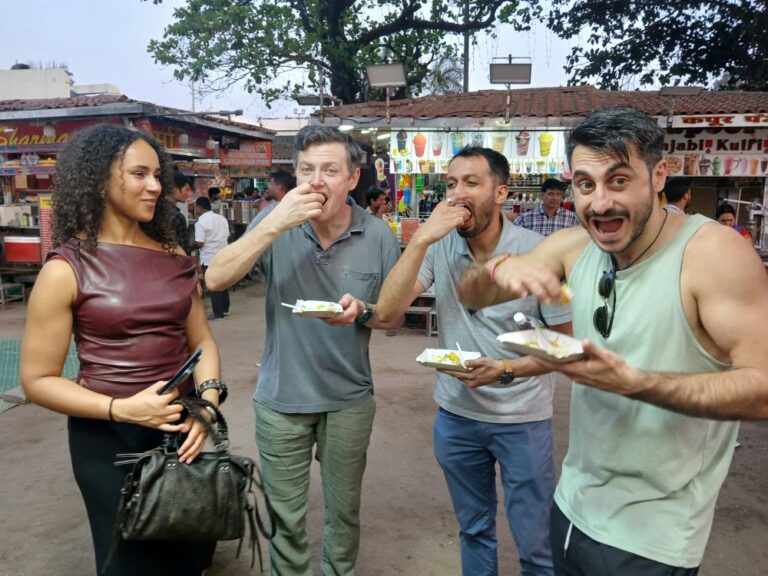
At the northern end of Marine Drive, Girgaon Chowpatty fills up after dark. Bhel puri, sev puri, pani puri, and kulfi to finish.
If you want to go further, head to Mohammed Ali Road for baida roti and kebabs, then Taj Ice Cream in Bohri Mohalla for hand-churned fruit ice cream made the same way since the 1880s.
What to leave out
Elephanta Caves. Worth seeing, but the return ferry plus the island takes four to five hours. It does not fit in a day that includes anything else.
Bandra and the northern suburbs. Good for a second day. Too far for a first one.
Bollywood studios. Enjoyable, but they are north of the city and eat half your day in transit.
Trying to do all three museums. Pick one, or none.
Practical notes
- Traffic peaks 8 to 11am and 5 to 9pm. Plan walking during those windows, driving between them.
- Ride-hailing apps work well and are cheaper than hotel cars.
- Comfortable shoes. A good Mumbai day involves eight kilometres on foot.
- Carry water and small notes for street food and taxis.
- Cover shoulders and knees if you plan to enter temples.
If your one day is a cruise stop or a layover
The route above works, compressed. We run it as an eight-hour shore excursion from the cruise terminal and as an airport layover tour between flights, both timed backwards from your departure with a buffer built in.
Could you do this without a guide?
The monuments, yes. The markets and Dharavi, less well. Not because it is unsafe, but because you would walk past most of what matters without knowing it was there.
If you would rather have the day arranged, our sightseeing tours run four or seven hours with a private car, or tell us what interests you and we will build the day around it.
Thinking of Elephanta instead? Read what to know before you go first, including the day it is closed.
On a cruise with only a day in port? Read our guide to the Mumbai cruise port.
Staying out after dark? Here are the best things to do in Mumbai at night.
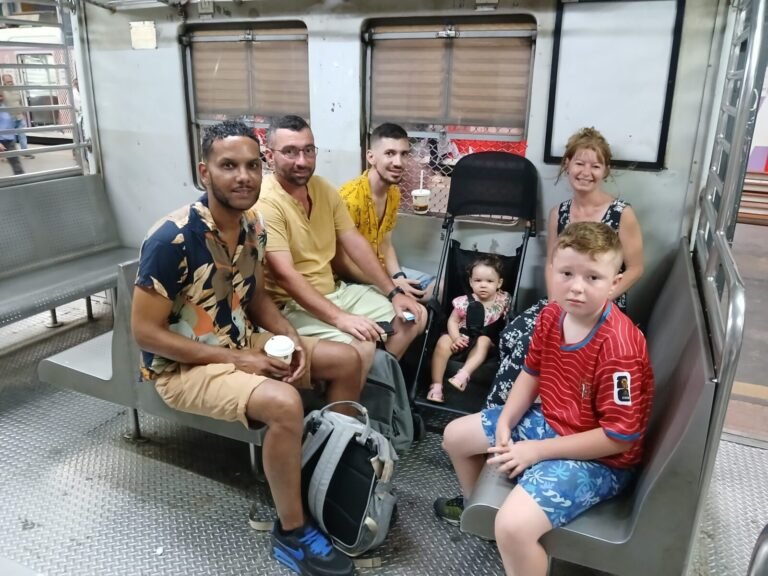
Beating the traffic: our guide to Mumbai local trains.