Mumbai’s suburban trains carry millions of people every day. They are the fastest way to move north and south through the city, they cost almost nothing, and for a lot of visitors they are the single most memorable thing they do here.
They are also genuinely intimidating the first time. Here is how they work.
The three lines
Western line runs north from Churchgate, along the side of the city most visitors stay on: Marine Lines, Charni Road, Grant Road, Mahalaxmi, Bandra and onwards.
Central line runs north-east from Chhatrapati Shivaji Maharaj Terminus through Dadar and beyond.
Harbour line runs south-east towards Navi Mumbai and Panvel.
The two you are most likely to use are Western and Central, and Dadar is where they meet, which makes it the busiest interchange in the city.
Fast trains and slow trains
This is the mistake visitors make most often. Slow trains stop everywhere. Fast trains skip most stations. Board a fast train by accident and you will sail past your stop and end up a long way north with a story to tell.
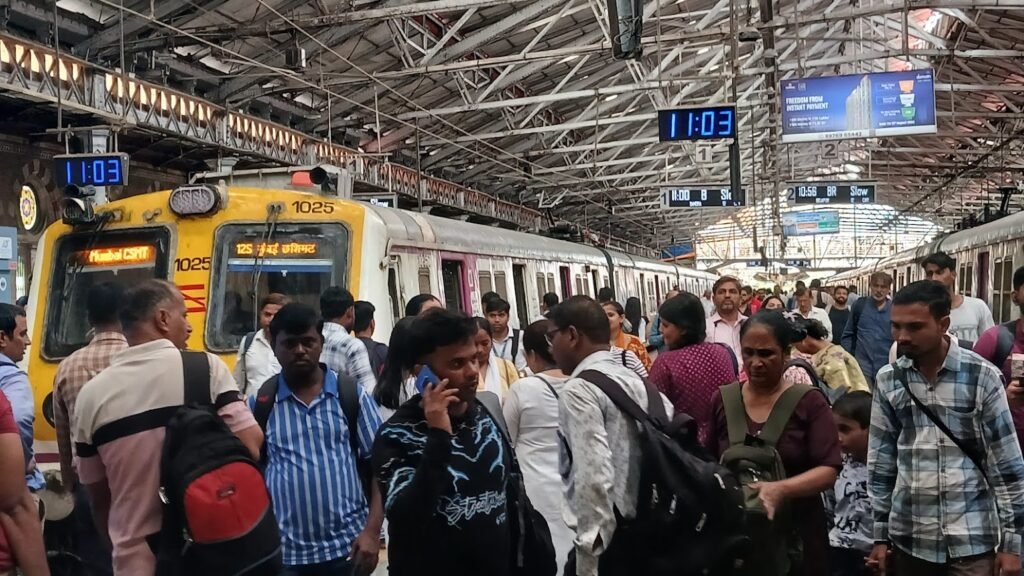
The indicator boards on the platform show the next train, its destination and whether it is fast or slow. If you are unsure, ask anyone standing near you. People are used to the question and will usually walk you to the right platform.
Buying a ticket in 2026
Go to the ticket counter at the station. Say your destination and whether you want first or second class, and pay by cash or card. This is the simplest option for visitors and it always works.
There are also ATVM machines at most stations if you have a smart card.
One thing worth knowing, because most guides online are out of date: the old UTS app has been discontinued. Since March 2026 unreserved and local tickets are booked through the RailOne app instead. It needs an Indian phone number and Indian payment methods, so for most visitors the counter is easier.
Tickets are extraordinarily cheap. Second class starts at a few rupees; first class costs several times more and is still inexpensive by any standard.
First class or second class?
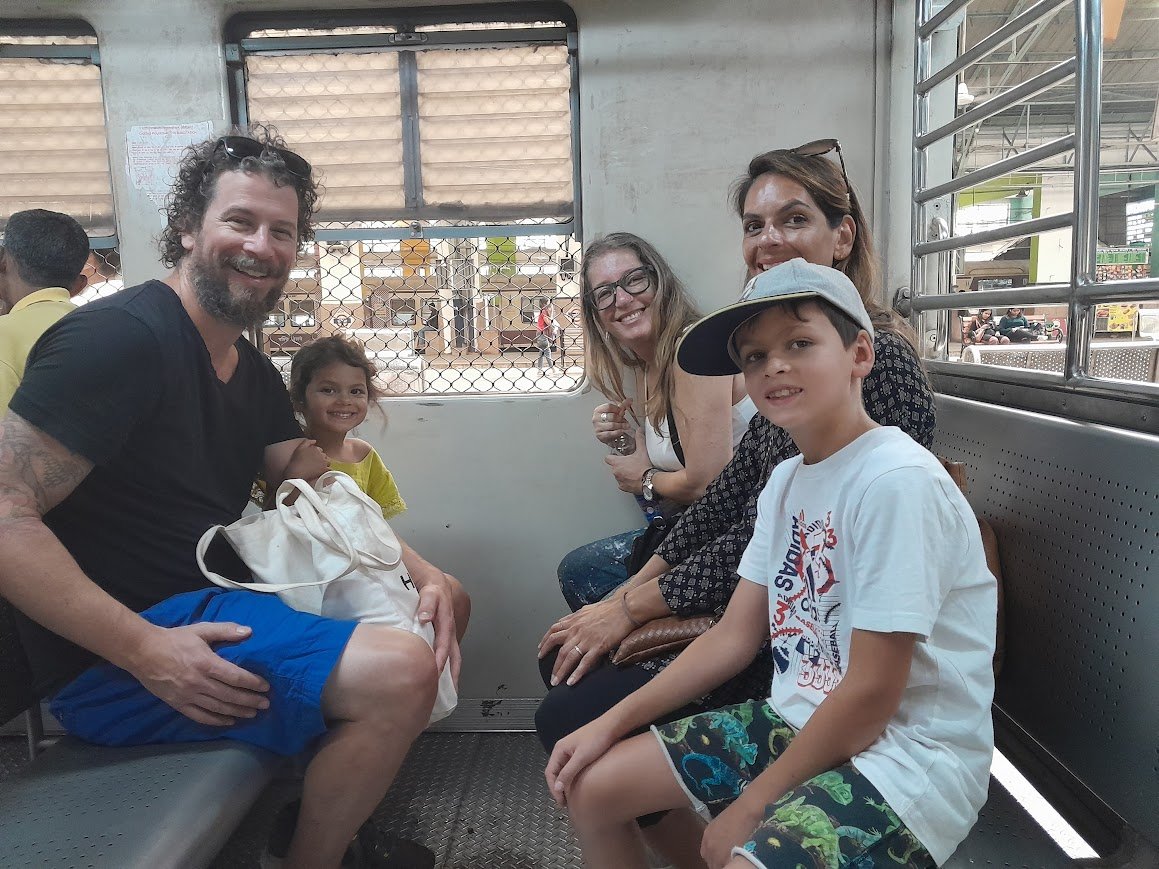
Second class is the real thing: crowded, noisy, vendors moving through selling clips and snacks, conversations everywhere. It is also where you will feel most out of your depth at rush hour.
First class has padded seats and far fewer people, and the queue at the ticket window is usually shorter. Off-peak it is close to pleasant.
Our honest advice for a first ride: take first class off-peak, see how it works, then try second class once you have the hang of it. There are also air-conditioned services on some routes.
Ladies’ compartments
Every train has compartments reserved for women, marked on the carriage and on the platform where it will stop. Women travelling alone are strongly advised to use them, particularly at night, and they are considerably calmer than the general coaches.
Men must not board them. There are also reserved coaches for passengers with disabilities and for senior citizens.
When to travel
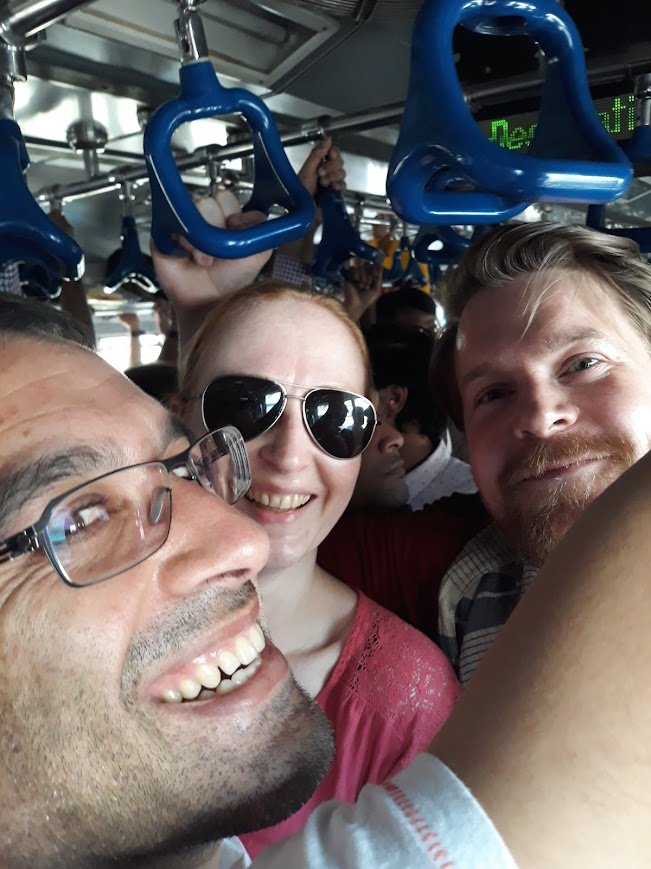
Avoid roughly 8:30 to 11am heading south, and 5:30 to 8:30pm heading north. This is the famous crush, and it is not the moment to try your first journey with a backpack.
Midday, around noon to 4pm, is ideal. Trains are frequent, seats are available, and you can watch the city go past instead of somebody’s shoulder. Late evening is also fine.
Rules worth taking seriously
Most of this is common sense, but the trains are genuinely dangerous if you treat them casually.
Never board or get off a moving train. People do it. Do not copy them.
Do not lean out of the doorway. Trains pass close together and poles sit close to the track.
Do not cross the tracks on foot. Use the bridge, always.
Wear your bag on your front in a crowded coach.
Move towards the door two stops before yours. Stops are short and the crowd will not part for you at the last moment.
Let people off before you get on. There is a rhythm to it, and you will pick it up in one journey.
Where the trains take you
Dhobi Ghat is beside Mahalaxmi station on the Western line — see our guide to Dhobi Ghat. The Dadar flower market is a short walk from Dadar. Marine Drive is at Charni Road or Marine Lines. And CSMT is worth the journey on its own, as a UNESCO-listed building you can simply walk into.
Riding with us
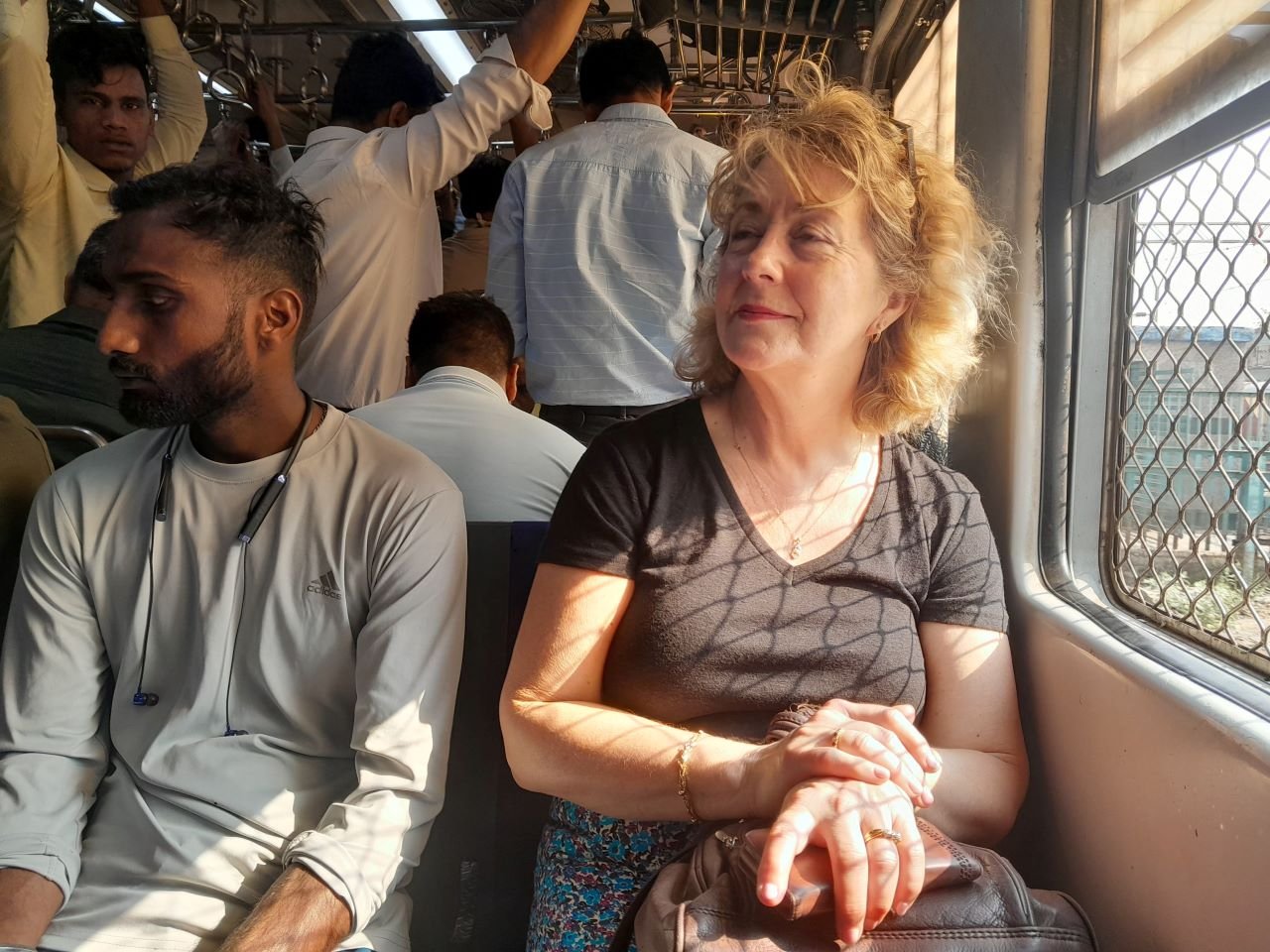
If you would rather not work it out alone the first time, several of our tours use the trains the way locals do. The dabbawala tour is built around Mumbai’s public transport and includes buses, trains and taxis. Our night tour and street food tour both include a local train ride, and the dawn tour catches the city and its trains before the rush.
Doing it once with someone who knows the system is usually enough. After that most people happily go off and do it themselves, which is rather the point.
Common questions
Are Mumbai local trains safe for tourists? Yes, with sensible precautions. Travel off-peak, keep your bag in front, and never board a moving train.
How do I buy a ticket? At the station counter, with cash or card. The UTS app was discontinued in March 2026; bookings are now via RailOne, which needs Indian payment details.
How much does it cost? Second class starts at a few rupees. First class is several times more and still cheap.
What is the difference between fast and slow trains? Fast trains skip most stations. Check the platform indicator before boarding.
Can men travel in the ladies’ compartment? No.
What time do the trains stop? They run from early morning until after midnight, with a short gap in the small hours.