The short answer: November to February. Mild, dry, comfortable for walking, and the reason most visitors come in those months.
But that is not the whole answer, because Mumbai in the monsoon is a genuinely different experience and the city’s biggest festival falls in the middle of the rain. Here is what each season is actually like.
November to February — the easy months
This is Mumbai at its most comfortable. Daytime temperatures usually sit in the high twenties, the humidity drops, and evenings are pleasant enough to sit out on Marine Drive without melting. Everything on any itinerary works: long walks, markets, the ferry to Elephanta, evenings by the sea.
The trade-offs are crowds and price. This is peak season, so tours, hotels and flights are busiest, and popular places fill up at weekends. Book ahead if your dates are fixed.
It is also cruise season, roughly October through to May, so ships call regularly at Ballard Pier. If you are arriving that way, see our Mumbai cruise port guide.
March to May — hot and humid
It gets seriously warm, and more importantly it gets humid. Afternoons in April and May are hard work if you are not used to it, and walking tours in the middle of the day stop being fun.
You can still visit, and prices are softer. The trick is to move your day to the ends: out early, rest through the afternoon, back out in the evening. Our dawn tour exists partly for this reason, and evenings are covered in our guide to things to do in Mumbai at night.
June to September — the monsoon
The rain arrives in June and can be extraordinary: not drizzle, but hours of hard, warm rain that empties the streets and then stops. The city turns green, the air finally cools, and the light is wonderful.
We will not pretend it is easy. Streets flood, trains get delayed, traffic gets unpredictable, and ferry services to Elephanta are cancelled in rough weather — see our Elephanta guide for that. Some days simply do not go to plan.
But it is the cheapest time to come, the city is far less crowded, and Mumbai in the rain is something most visitors never see. Walking tours still run; you just need decent shoes and a sense of humour.
The festival worth planning around
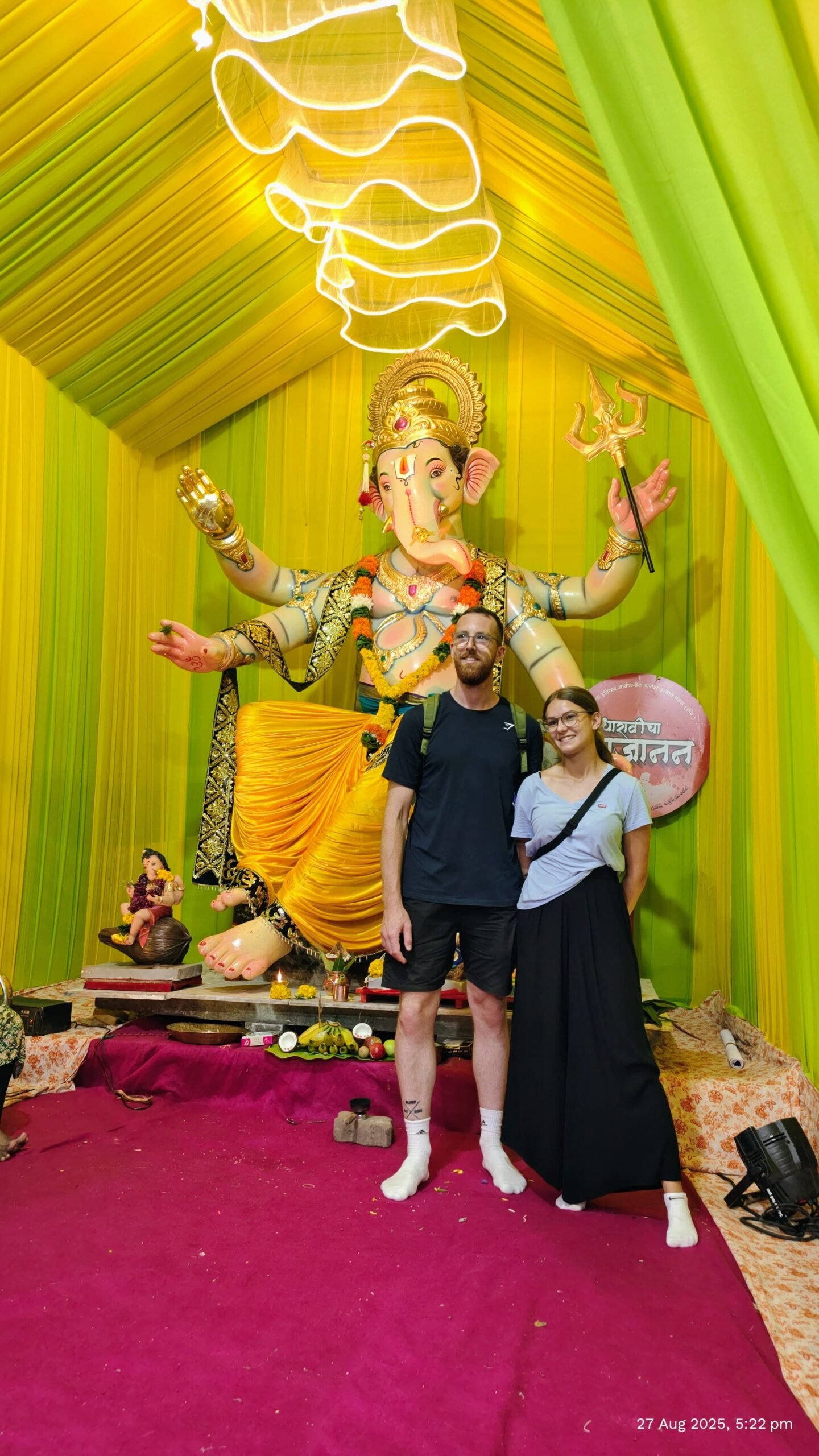
Ganesh Chaturthi falls in the monsoon, usually in August or September, and it is the biggest thing that happens in Mumbai all year. Elaborate idols of Ganesh are installed across the city for days of celebration, and at the end they are carried through the streets in enormous processions and immersed in the sea, with Girgaum Chowpatty as the focal point.
If you can tolerate rain and crowds, this is the most extraordinary time to be here. The dates move each year with the Hindu calendar, so check before booking flights.
Other festivals
Diwali falls in October or November and the city lights up for several days. Navratri comes in September or October with nine nights of dancing. Holi lands in March. Ramadan transforms the food streets around Mohammed Ali Road, where the grills stay busy late into the night.
All of these move year to year, so check the dates rather than assuming.
The best time of day, whatever the month
Early. Mumbai does its real work before most visitors are awake: the flower market at Dadar, the fish auction at Sassoon Dock, the first trains. It is cooler, quieter and far more photogenic than the middle of the day.
The other good window is the evening, once the heat drops and the seafront fills up.
So when should you come?
First visit, want it easy: November to February.
Want the city at its most dramatic and do not mind getting wet: the monsoon, ideally around Ganesh Chaturthi.
Travelling on a budget: June to September, when prices are lowest.
Coming in the hot months: March to May works if you plan around the afternoons.
Whenever you come, our tours run year round. The Dharavi tour and the street food tour both work in any season, and we will tell you honestly if the weather on your dates makes something a bad idea.
Common questions
What is the best month to visit Mumbai? December and January are the most comfortable.
Is the monsoon a bad time to visit? It is harder, not bad. Fewer crowds, lower prices, and a city most visitors never see. Expect some disruption.
When is Ganesh Chaturthi? August or September, moving each year. Check the date before booking.
Do tours run in the rain? Yes. Walking tours continue through the monsoon, and we advise you honestly if conditions are poor.
When is cruise season in Mumbai? Roughly October to May.
Planning an early start? See Dhobi Ghat, Mumbai.