Most people arrive in Mumbai with two days, a list of landmarks and no real idea how the city fits together. This is how we would spend those two days, written by guides who live here, with honest timings and the traffic accounted for.
Understand the shape of the city first
Mumbai was seven islands. The Portuguese held them, the British joined them with landfill, and the result is a long thin peninsula where almost everything historic sits at the southern tip and almost everyone lives further north. That single fact explains why your day works or does not.
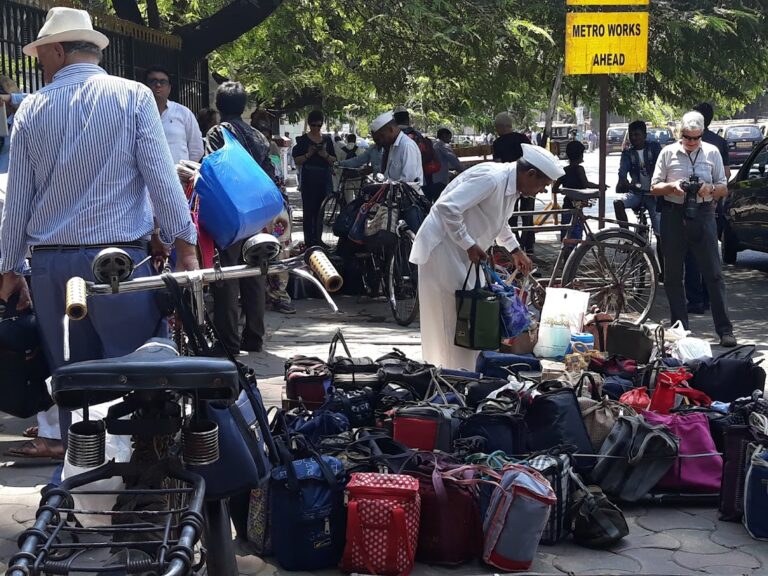
South Mumbai holds the Gateway of India, the Gothic and Art Deco districts, the museums and the old bazaars. Dharavi, Dhobi Ghat and Bandra sit in the middle. The airport is north. Plan your route north to south or south to north, never zigzagging, or you will spend your holiday in traffic. You can see it up close on our Dharavi, Dhobi Ghat & Flower Market tour.
Day one, morning: start where the city starts
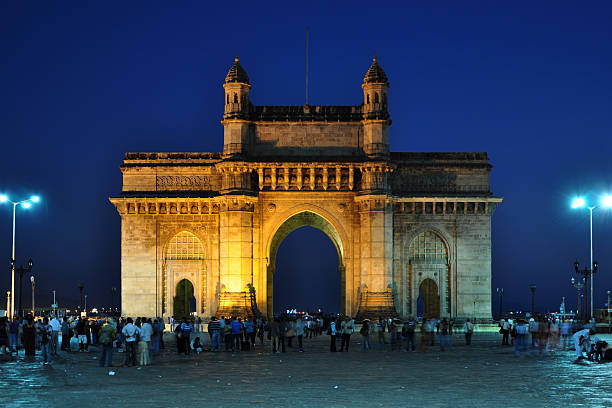
Begin at the Gateway of India before 8am. It is quiet, the light is good, and the Taj Mahal Palace behind you is worth ten minutes of your attention on its own. The hotel was built in 1903 by Jamsetji Tata, reportedly after he was refused entry to a European-only establishment nearby.
Walk north into the Fort district. The Bombay High Court, the University of Mumbai and the Rajabai Clock Tower stand in a row overlooking the Oval Maidan, where cricket has been played continuously for over a century. On the far side of the maidan is one of the largest collections of Art Deco buildings in the world, second only to Miami. Both the Victorian Gothic and the Art Deco ensembles are UNESCO listed.
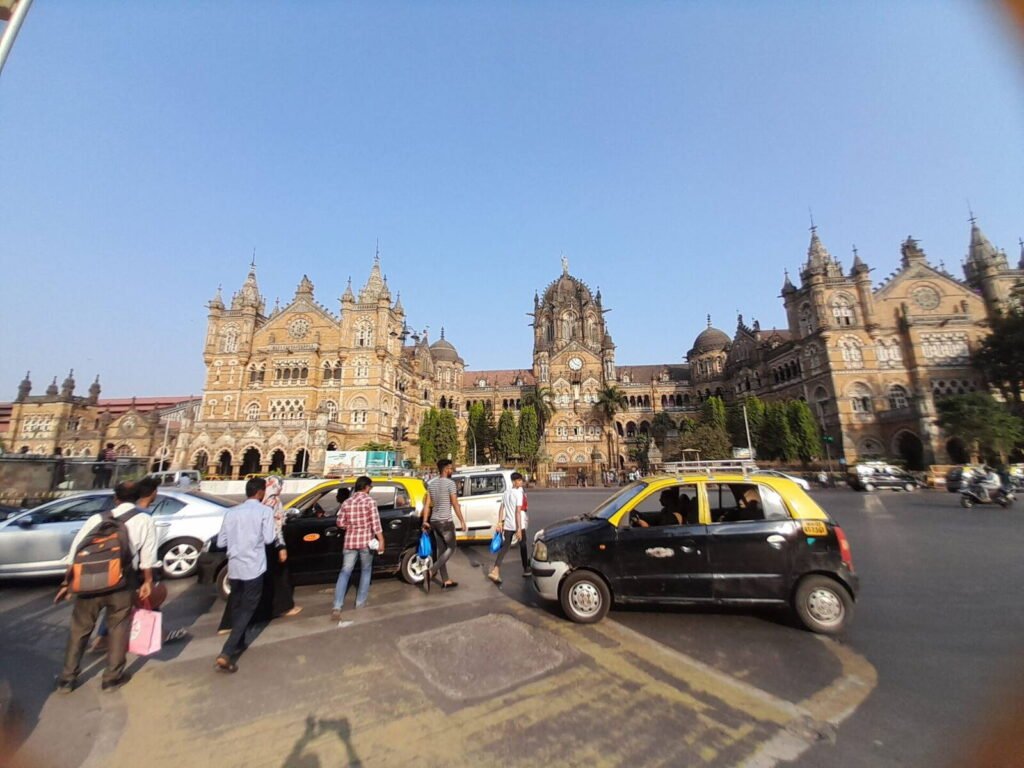
Finish the morning at Chhatrapati Shivaji Maharaj Terminus, still the busiest railway station in India and, in our opinion, the single most impressive building in the city.
Day one, afternoon: Dharavi
This is the part most itineraries skip and the part our guests talk about afterwards.
Dharavi is roughly one square mile, home to somewhere near a million people, and generates an estimated one billion US dollars a year. It is not a place people go to be pitied. It is a working district: plastic recycling that handles a large share of Mumbai’s waste, potteries run by families who came from Gujarat generations ago, leather workshops, bakeries, garment units.
If you visit, visit properly. Go on foot, with a guide from the community, and do not photograph people inside their homes or workshops without asking. Any operator who lets you do otherwise is not one to book with.
Our Dharavi Slum Tour runs two hours and is led by guides who grew up in these lanes.
Day one, evening: eat properly
Mumbai street food is its own argument. Start with vada pav, a spiced potato fritter in a bread roll, sold on nearly every corner and often called the Mumbai burger. Then pani puri, hollow crisp shells filled with spiced water, eaten in one go or not at all.
Head to Chowpatty beach at sunset for bhel puri and sev puri, then on to Mohammed Ali Road for baida roti and kebabs cooked on the street. Finish with hand-churned fruit ice cream at Taj Ice Cream in Bohri Mohalla, made the same way since the 1880s.
Is it safe to eat? Generally yes, if you eat where there is a queue of locals and the food is cooked in front of you. Avoid pre-cut fruit and anything sitting out. Our street food tour exists partly because knowing which stall is which takes years.
Day two, morning: Elephanta Caves
The ferry leaves the Gateway of India from around 9am and takes about an hour. On Elephanta Island you climb 120 steps to a set of caves cut into the rock between the 5th and 8th centuries, the centrepiece being the Trimurti, a three-faced Shiva nearly six metres tall carved directly into the hillside.
Practical notes: the caves are closed on Mondays. Go early, both for the light and because the queue for the return ferry grows through the afternoon. Allow four to five hours door to door.
If caves interest you but the ferry does not, the Kanheri Caves sit inside a national park in the north of the city: 109 caves carved over a thousand years, reachable by road.
Day two, afternoon: markets, laundry and temples
Back on the mainland, spend the afternoon in the older parts of the city. Crawford Market for produce and the wholesale lanes behind it. Zaveri Bazaar for gold. Mumbadevi Temple, which gives the city its name.
Stop at the Dhobi Ghat viewing bridge at Mahalaxmi. Around 7,000 people work the world’s largest open-air laundry, washing clothes in concrete pens by hand. It is best seen mid-morning or late afternoon.
End at Marine Drive as the streetlights come on. The curve of lamps along the bay is why locals call it the Queen’s Necklace.
Practical advice people actually need
When to visit. November to February is dry and comfortable. March to May is hot and humid. June to September is monsoon, which floods streets but makes the city green and is genuinely beautiful if you do not mind wet feet.
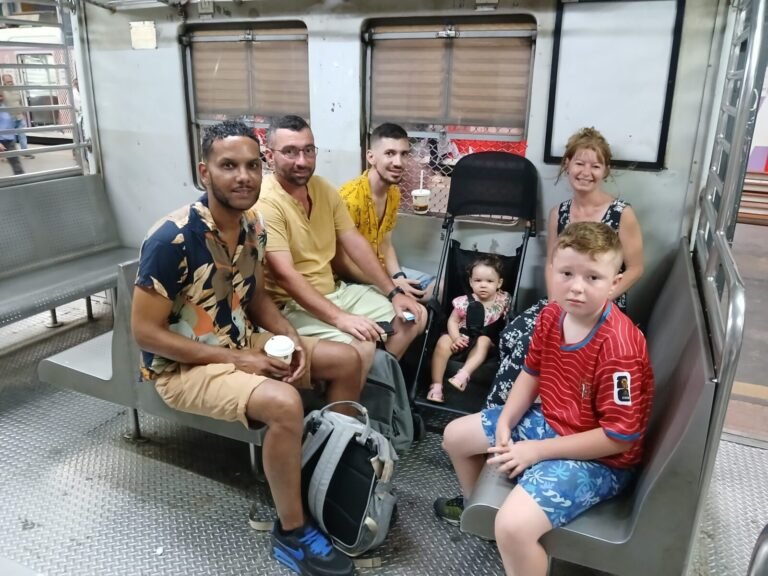
Getting around. Local trains are fast and cheap but crowded; travel outside 8 to 11am and 5 to 9pm. Ride-hailing apps work well. Black and yellow taxis are metered and fine for short hops.
What to wear. Cover shoulders and knees for temples. Closed-toe shoes for markets and Dharavi. It is hot most of the year, so cotton over synthetics.
Money. UPI is everywhere, but carry small notes for street food and taxis.
Is Mumbai safe? Yes, and it is one of the safer large cities in India, including for solo travellers. Normal city sense applies: watch your bag in crowds, use registered taxis at night.
If you have less time
One day: Gateway, Fort district, Dharavi, street food. Skip Elephanta.
A cruise stop: eight hours ashore covers the landmarks and Dharavi comfortably. See our shore excursion.
A long layover: ten hours between flights is enough for a real look at the city. See our layover tour.
A last thought
Mumbai does not arrange itself neatly for visitors. It is loud, dense and contradictory, and the interesting parts are rarely the ones on the postcards. Two days is enough to get past the surface if you spend them well.
If you would rather not work it out alone, tell us how long you have and we will build the days around what interests you.
Planning the detail? See our guides to Elephanta Caves and where to eat street food in Mumbai.
Interested in the film industry? See how to experience Bollywood in Mumbai.
Would rather not plan it yourself? Our 2 day Mumbai tour covers this itinerary with one guide throughout.
Day two often works well as our Elephanta Caves tour.
Film fans can swap an afternoon for our Bollywood studio tour.