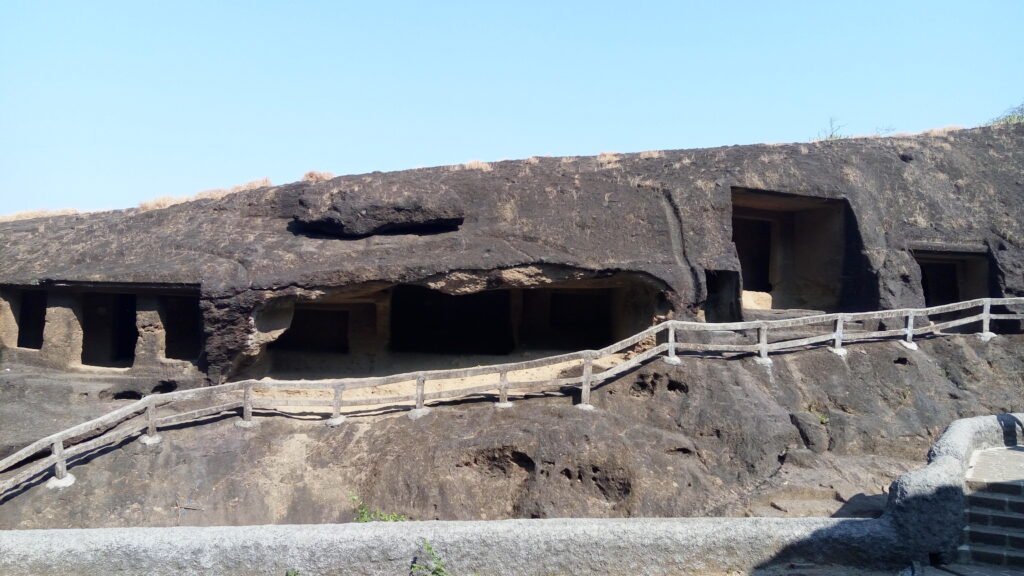
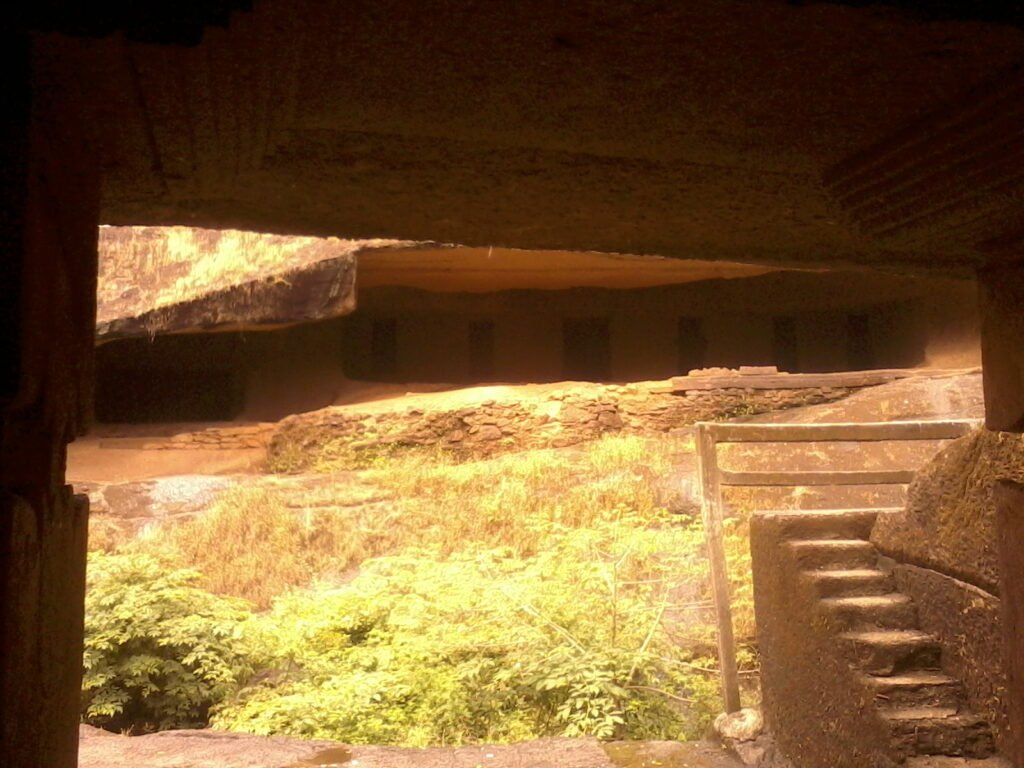
Forty kilometres north of the Gateway of India, inside a national park that shares a boundary with the city, 109 caves are cut into a single basalt hillside. Monks began carving them in the 1st century BCE and carried on, on and off, for a thousand years.
Most people who visit Mumbai never hear of Kanheri. Elephanta gets the ferry, the photographs and the UNESCO listing. Kanheri gets school groups and the occasional birdwatcher. That is a large part of why it is worth the drive.
What Kanheri actually is
Not a temple, and not a single monument. Kanheri was a working Buddhist monastery and a centre of learning, built beside an ancient trade route running inland from the western ports. Merchants funded the carving and left their names on the walls. Monks lived, studied and taught here.
So you are not looking at something that was built and finished. You are walking through a university and a dormitory, cut out of a hill with hand tools across ten centuries by people who kept adding to it as money and need allowed.
Cave 3, the one that stops people
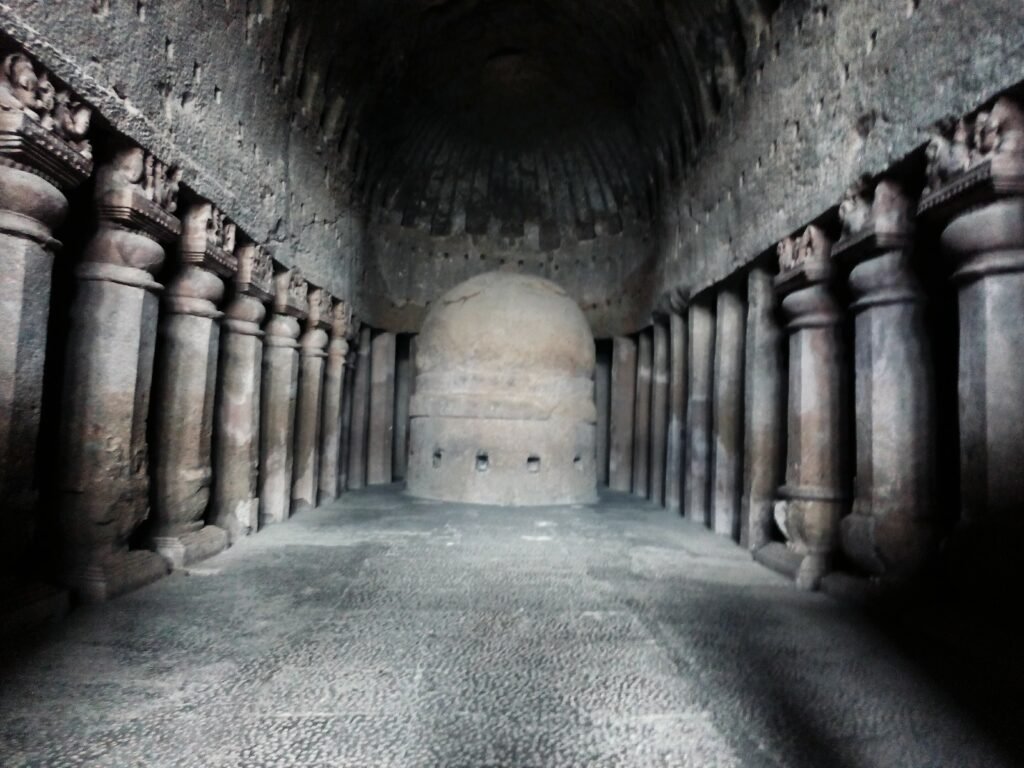
The great prayer hall is the reason to come. Thirty-four stone pillars line a chamber carved entirely from the rock, and two standing Buddhas more than five metres tall flank the entrance.
Nothing here was assembled. Every pillar, every step, every rib in the ceiling was made by taking away the stone around it. The carvers worked downward from the top, so the rock above never needed propping up. There is no undo. A misjudged cut is permanent, and they were cutting a hall the size of a church.
The water system, which is the real surprise
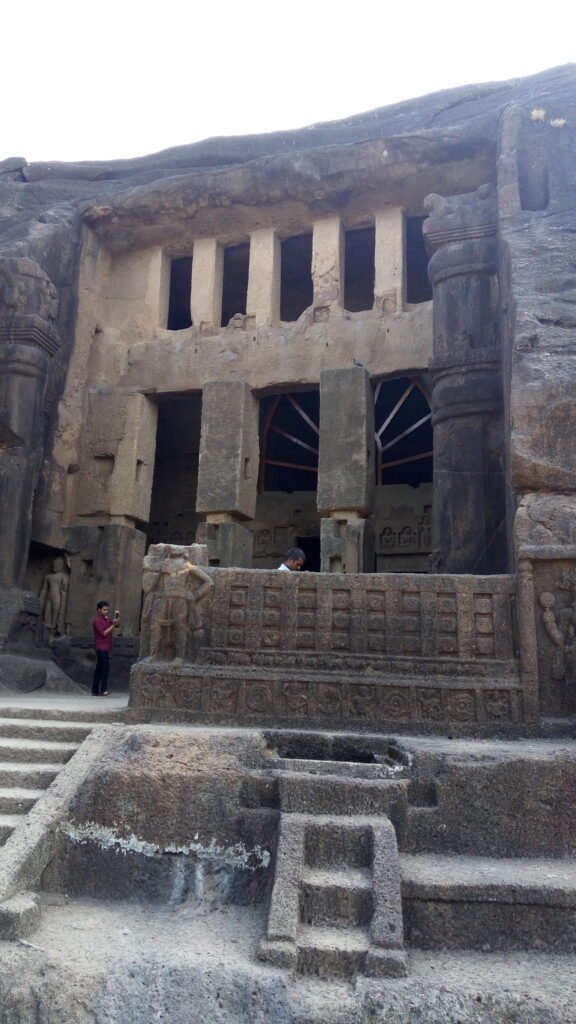
A thousand monks needed water on a hillside with no river. So the hillside was turned into the plumbing: channels cut along the rock faces to catch monsoon runoff, feeding cisterns hollowed into the stone.
They still hold water. Two thousand years on, with nobody maintaining them, the system does the job it was cut to do. If you only remember one thing from Kanheri, it tends to be this rather than the Buddhas.
Getting there
Kanheri sits inside Sanjay Gandhi National Park, whose entrance is near Borivali station on the Western line. By train from Churchgate it is a long ride, and the caves are a further six kilometres inside the park from the gate, which you cover on foot, by park bus or by rickshaw depending on what is running.
By road from South Mumbai it is around ninety minutes each way, and that figure moves a lot with traffic. Be honest with yourself about this: a visit to Kanheri is three hours of travelling wrapped around two or three hours of caves. It is a day, not a morning.
The drive in is part of it, though. The change from Mumbai traffic to closed forest canopy takes about four minutes and never stops being strange. Deer and langurs are common along the road.
Tickets, timing and when to go
There are two charges, not one: entry to the national park at the gate, and a separate entrance fee for the caves themselves. Both are modest. Rates and holiday timings change from time to time, so treat any figure you read online, including ours, as a guide rather than a promise.
Go early. The caves face west. In the morning the interiors are cool and evenly lit; by mid-afternoon the sun comes straight in, the stone has been baking for hours, and the walk between cave levels is hard work. An 8am start is a different day from an 11am one.
Allow two to three hours at the site itself. You can see the main caves in forty minutes, but that is not really seeing them.
What to wear and bring
- Closed-toe shoes. There are stone steps between levels and uneven ground throughout.
- Water, more than you think. There is little shade between caves.
- Sunscreen and a hat for the open stretches.
- A torch, or your phone. Some of the smaller cells are dark inside.
The main caves, including the great prayer hall, are reached without a hard climb. The upper caves involve more steps. If stairs are a concern, say so and plan around the lower levels, which hold most of what matters.
The Global Vipassana Pagoda, if you have time
Not far from the park is a modern meditation hall built in the style of Myanmar’s Shwedagon, with one of the largest stone domes in the world and no pillars holding it up. It is a strange and effective counterpoint to Kanheri: the same tradition, two thousand years apart, one carved into a hill and one built on reclaimed ground beside the sea.
It adds about an hour and a half to the day. Worth it if you are not already tired.
Who should go, and who should not
Go if you like ancient sites, if you have already done the standard Mumbai list, or if the idea of a rainforest inside a city of twenty million appeals. Go if you want somewhere quiet. Kanheri on a weekday morning is close to empty.
Think twice if you only have one or two days in Mumbai. Three hours in a car is a lot to spend when you have not yet seen the Gateway, Dharavi or a market. Our one day in Mumbai itinerary covers what to do instead. And if it is caves you are after on a short trip, Elephanta is closer, reached by ferry, and easier to fit into a half day.
One more honest note: leopards live in Sanjay Gandhi National Park. You will almost certainly not see one, and the park is visited safely by thousands of people a week. It is a fact about the place, not a risk to plan around.
Seeing it with us
Our Kanheri Caves tour runs as a private six-hour day with a car and a guide, picking you up from your hotel, Airbnb, the airport or the cruise terminal. Park entry and cave fees are paid by us, so there is nothing to sort out at the gate. Start times are 8am, 9am or 10am, and we would push you towards 8.
We run it privately rather than as a group tour for a practical reason: there is no sensible way to do Kanheri on public transport and still have the day work.
If you would rather stay closer to the city, the Elephanta Island caves tour covers the other great rock-cut site near Mumbai, and our Mumbai sightseeing tour takes in the city itself.
Common questions
How old are the Kanheri Caves? The earliest date from around the 1st century BCE, and carving continued into the 10th century. For about a thousand years this was a working monastery and centre of learning.
How many caves are there? 109, though many are small monks’ cells rather than halls. A dozen or so are the ones you will spend time in.
How far is Kanheri from Mumbai? About 40 kilometres north of South Mumbai, roughly ninety minutes each way by road depending on traffic.
Is Kanheri better than Elephanta? Different. Elephanta is one spectacular Hindu cave temple reached by a ferry ride. Kanheri is a whole Buddhist settlement in a forest. If you have time for one and want the famous sculpture, go to Elephanta. If you want space, quiet and scale, go to Kanheri.
Is it suitable for children? Yes. Most children enjoy the forest drive and climbing between caves. Closed-toe shoes and plenty of water are essential.
How long do I need? Two to three hours at the caves, plus travel. Budget most of a day.
Header photograph: the great chaitya hall in Cave 3 by Rutvik2022, CC BY-SA 4.0, via Wikimedia Commons.