
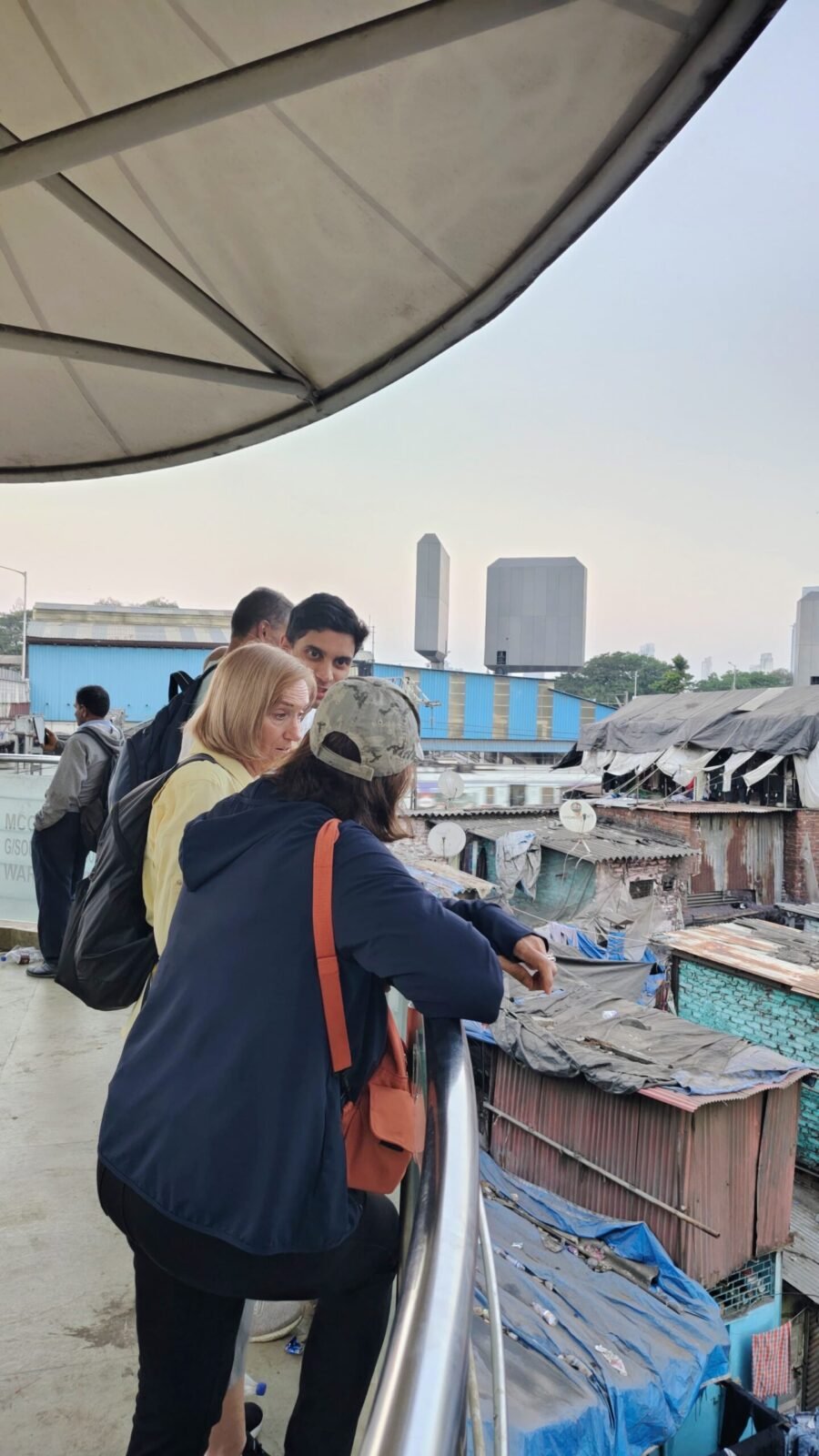
From the bridge near Mahalaxmi station you look down on something that does not quite make sense at first: hundreds of open concrete pens, each with a stone in it, and people standing in them beating clothes against the stone. Behind it all, glass towers.
This is Dhobi Ghat, and it has been doing the same job since 1890.
What it actually is
Dhobi Ghat is an open-air laundry. Not a tourist attraction that happens to still work — a working industrial site that happens to be worth looking at.
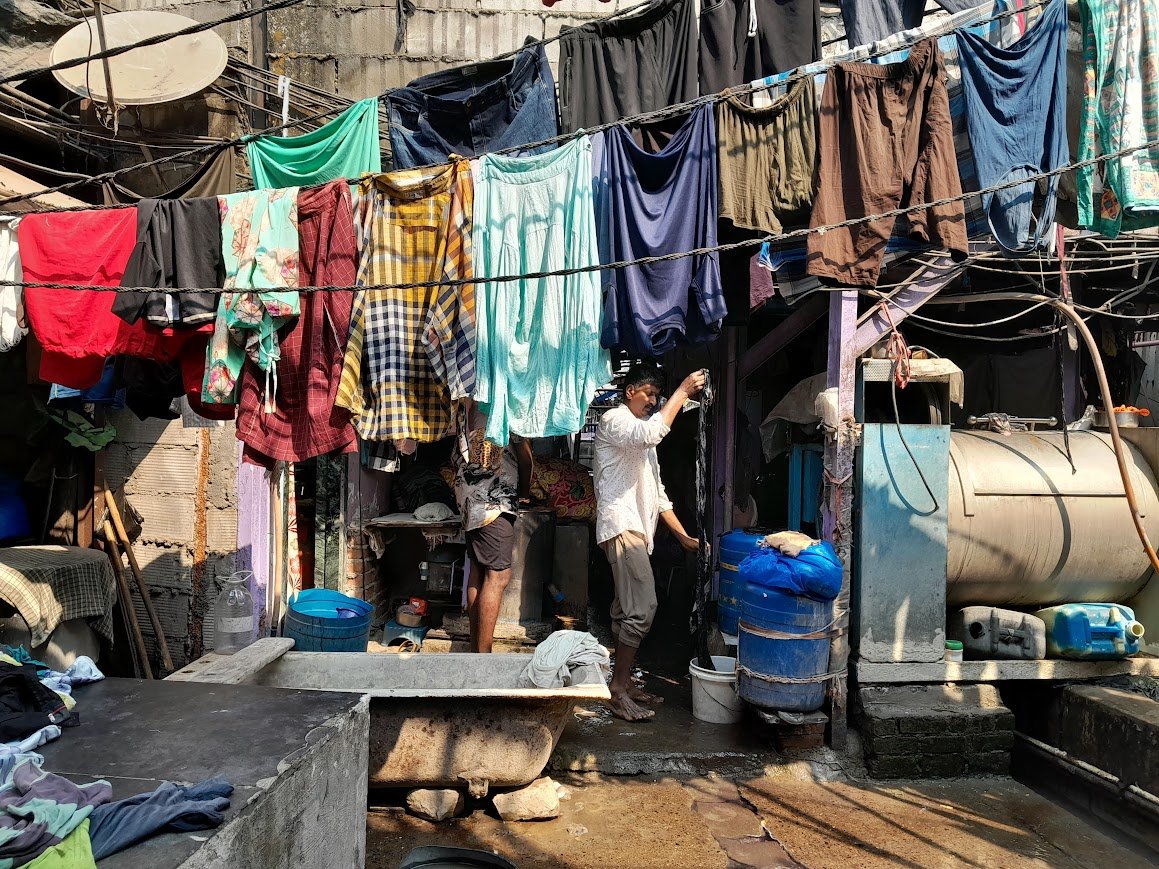
Laundry arrives here from across Mumbai: hotels, hospitals, restaurants, households. It is washed by hand in rows of concrete troughs, each fitted with a flogging stone, then dried, pressed and returned. The people who do this work are called dhobis, and most of them learned it from their parents, who learned it from theirs.
It is often described as the world’s largest open-air laundry, and it holds a Guinness World Record from 2011 for the most people hand-washing clothes at a single location, when 496 dhobis washed together.
Built in 1890, and still running
The ghat was built under British rule in 1890 as a central laundry for the city, starting with a few dozen washers. More than 135 years later it is still doing exactly what it was built for, which is unusual for anything in a city that rebuilds itself as fast as Mumbai does. It is now recognised as a heritage structure.
Estimates of its size vary and nobody agrees on an exact figure, but it is generally put at several thousand dhobis, around a thousand washing troughs, and somewhere around a hundred thousand items of laundry a day. Whichever numbers you believe, the scale is the point.
How they keep track of everything
This is the part visitors find hardest to believe. Tens of thousands of garments arrive from hundreds of different customers, are washed communally, dried on shared lines, pressed, and then go back to the right person.
There is no computer. Items are marked with a system of codes the dhobis read at a glance, and things very rarely go missing. It is the same kind of quiet, hand-built logistics that makes the dabbawalas famous, and it gets a fraction of the attention.

Where to see it
From the bridge. The flyover across the railway tracks by Mahalaxmi station, on the Western line, gives you the classic view over the whole site. It is free, there is no entry fee, and you can simply walk up. If you are doing this independently, this is where to go.
From inside. Going down into the ghat itself is a completely different experience: the noise, the heat, the smell of soap, the sheer physical work. You need a guide for this, both to find your way and because it is a workplace and people are busy.
The best time of day
Early morning. Washing starts at dawn and the site is at its most active in the first hours of daylight, with the light low across the troughs. By the middle of the day much of the washing is done and the drying lines are full, which is also a sight but a quieter one.
In the monsoon the drying is much harder and the rhythm changes, which is interesting in its own way. See our guide to the best time to visit Mumbai for the seasons.
Photography, and being decent about it
From the public bridge you are photographing a landscape and nobody minds. Down inside, you are photographing people at work in the place they also live, and that is different.
Ask before photographing anyone close up. Do not photograph into homes. If someone says no, accept it. It costs you nothing and it is the difference between a visitor and a nuisance.
Getting there
Take a local train on the Western line to Mahalaxmi and the bridge is right there. A taxi or app cab will know it as Dhobi Ghat or Mahalaxmi Dhobi Ghat. It sits near the Saat Rasta junction, and is easy to combine with other stops in central Mumbai.
Seeing it with us
Dhobi Ghat is on our Dharavi, Dhobi Ghat and flower market tour, which starts early and takes in the Dadar flower market at its busiest before the ghat and Dharavi. It is also a stop on our dawn tour and our Dharavi and Mumbai city tour.
If you only want the view from the bridge, go on your own. It is free and it is genuinely impressive. A guide is worth it when you want to go down into it and understand what you are looking at.
Common questions
Is there an entry fee for Dhobi Ghat? No. Viewing from the public bridge near Mahalaxmi station is free.
Can you go inside Dhobi Ghat? Yes, but go with a guide. It is a working site and a residential one.
What is the best time to visit? Early morning, when washing is in full swing.
How old is Dhobi Ghat? It was built in 1890, so it is over 135 years old.
Is it worth visiting? For the view from the bridge, absolutely, and it costs nothing. Going inside with a guide is worth it if you want to understand how it works.
Getting there by rail? See our guide to Mumbai local trains.