Dharavi is one of the most written-about places in India and one of the least understood. It has been filmed, photographed, quoted in economics papers and used as shorthand for poverty in a hundred news reports. Most of what gets said about it is either too grim or too romantic.
We are guides who were born and raised here, and we have shown visitors around since 2012. This is our attempt at a straight, complete account: what Dharavi actually is, how it works, what is genuinely remarkable about it, what is genuinely hard about it, and how to visit without being part of the problem.
The basics: what and where
Dharavi sits almost exactly in the middle of Mumbai, between the Western and Central railway lines, about half an hour from the airport. That central position is the whole story of the place: it was once marshland on the edge of the city, and as Mumbai grew outwards it ended up surrounded by some of the most valuable real estate in India.
It covers somewhere around 2.1 square kilometres, or roughly 500 to 600 acres depending on where you draw the boundary. Population estimates range from about 700,000 to a million people. Nobody knows the exact figure, and anyone who quotes one to the nearest thousand is guessing. What is not in doubt is the density: it is among the most densely populated places on earth, with estimates well over 250,000 people per square kilometre.
It is often called Asia’s largest slum. That label is doing a lot of work, and it is worth being careful with it. Dharavi is not a camp or a temporary settlement. It is a neighbourhood that has been continuously inhabited for over a century, with permanent buildings, established businesses, schools, temples, mosques and churches, and families in their third and fourth generation here.
A short history
Dharavi began in the nineteenth century as a fishing village on a mangrove swamp, home to the Koli community who fished the creek. As the swamp was filled in and the city expanded, two industries arrived that the colonial city wanted out of its centre: tanning and pottery.
Potters from Saurashtra in Gujarat settled in what is still called Kumbharwada, the potters’ quarter. Tanners from Tamil Nadu came for the leather trade. Later waves brought garment workers from Uttar Pradesh, embroiderers, and traders from across India. That is why Dharavi is not one community but dozens, and why you will hear several languages on one lane.
Almost everyone here, or their parents or grandparents, came to Mumbai for work. Dharavi is what a city looks like when it is built by people the city did not plan for.
The economy: the part most visitors do not expect
The thing that surprises people most is not the poverty. It is how busy it is. Dharavi is not a place people wait out the day. It is a working district, and by most estimates its informal economy turns over somewhere approaching a billion US dollars a year across thousands of small enterprises. Estimates vary widely because none of this is formally recorded, but every serious study lands on a very large number.
Recycling
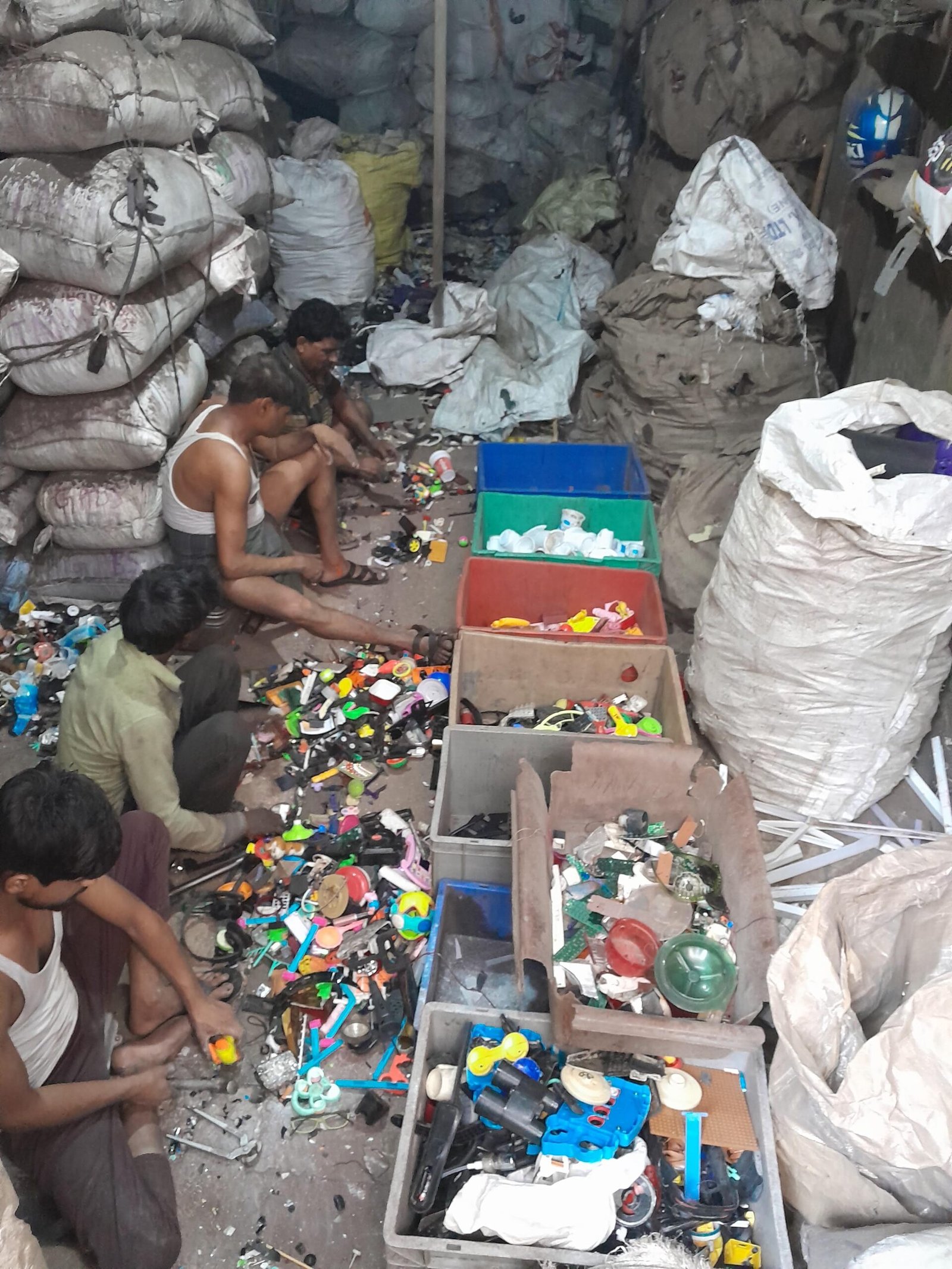
This is the industry Dharavi is best known for, and rightly so. A very large share of Mumbai’s recyclable waste ends up here, sorted and processed by hand. Plastics, cardboard, metal, electronics, glass, cooking oil tins, computer parts, ballpoint pens: if it can be recovered, someone here recovers it.
The process runs in stages across different workshops. Waste arrives and is sorted by type and grade. Plastics are washed, shredded, melted and pelletised, then sold on to factories as raw material. Watching it work is genuinely impressive, and slightly humbling if you come from a country that struggles to recycle a fraction as much with far more equipment.
It is also hard, hot work, often without the protective equipment it should have. Both things are true at once, and we say both on our tours.
Pottery in Kumbharwada
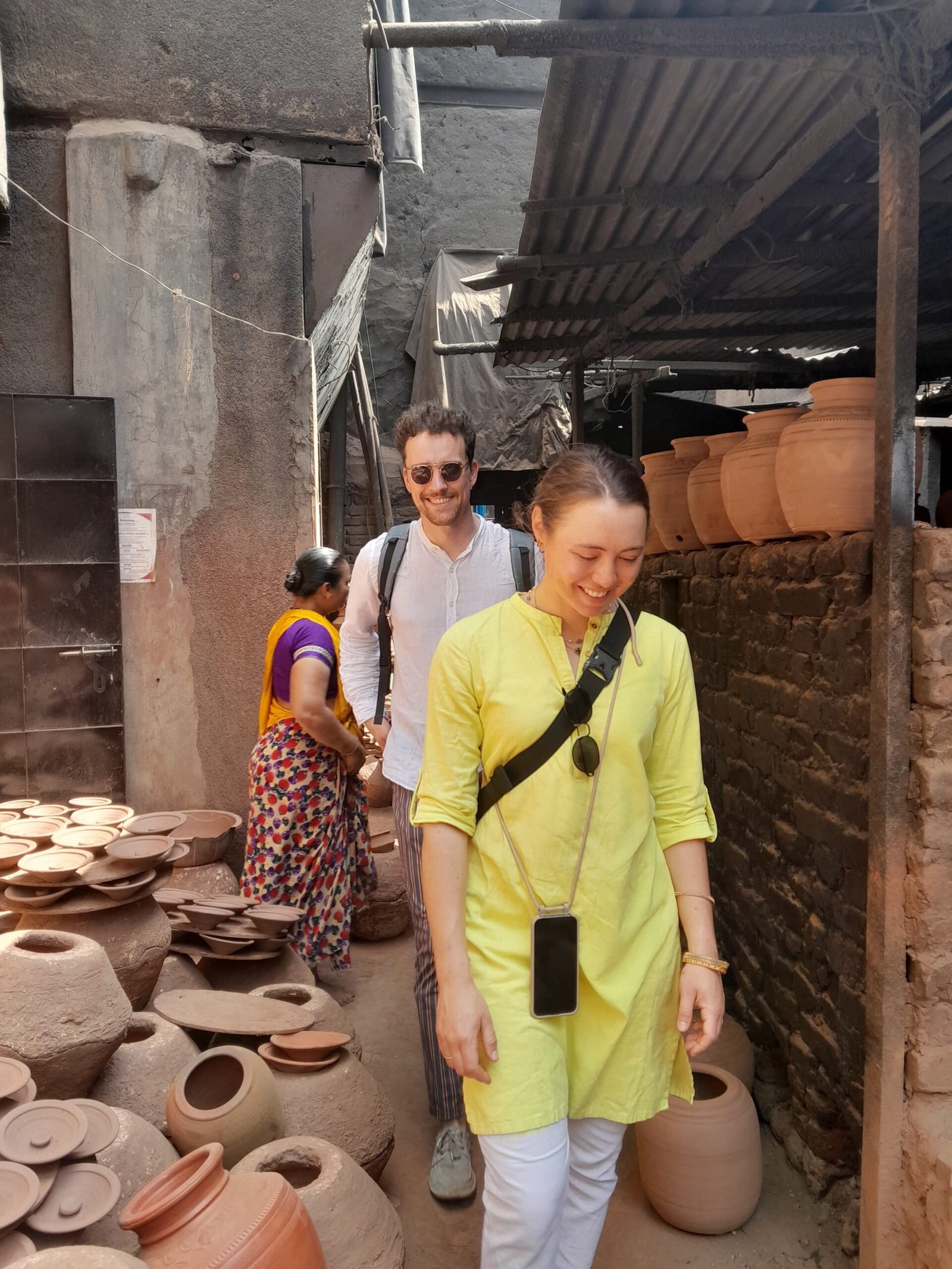
The potters’ quarter is the oldest industry here and, visually, the most striking. Families work clay in open yards, throw pots on wheels, and fire them in kilns that push smoke across the rooftops. Many of these families have been doing this for four or five generations, using the same techniques their great-grandparents brought from Gujarat.
If you want to understand Dharavi as a place with deep roots rather than a recent settlement, Kumbharwada is where it becomes obvious.
Leather
Dharavi’s leather trade is old and still significant. Workshops produce bags, jackets, belts and wallets, some of it for export and some sold in shops on the main roads. The quality at the top end is genuinely good, which surprises people who assume everything here is rough work.
Textiles and garments
Behind many doorways are rooms of sewing machines and embroidery frames, producing clothing for Indian and international markets. This industry employs a huge number of people and is largely invisible from the street, which is part of what makes a guided walk useful.
Food
Papad drying on rooftops, bakeries, sweet-makers, snack producers. Much of it is run by women’s cooperatives working from home. It is one of the quieter industries and one of the most widespread.
What it is actually like to walk through
The lanes vary enormously. Some are wide enough for a car; some are narrow enough that you walk single file with your bag held in front of you. The commercial and industrial areas are noisy and open. The residential lanes are quieter, darker, and much more private, which is exactly why we treat them differently.
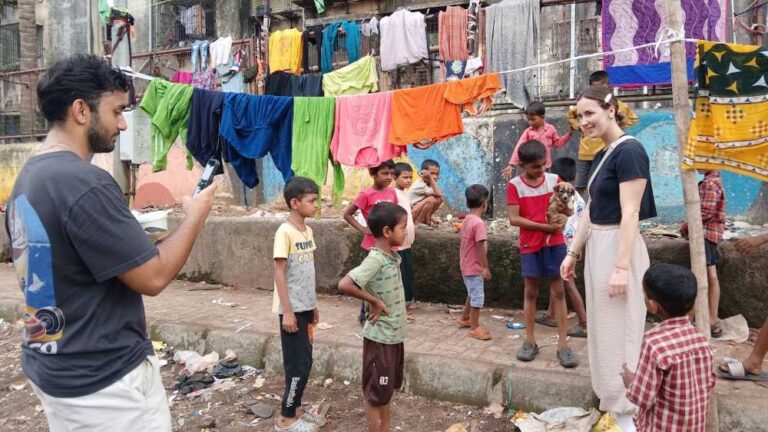
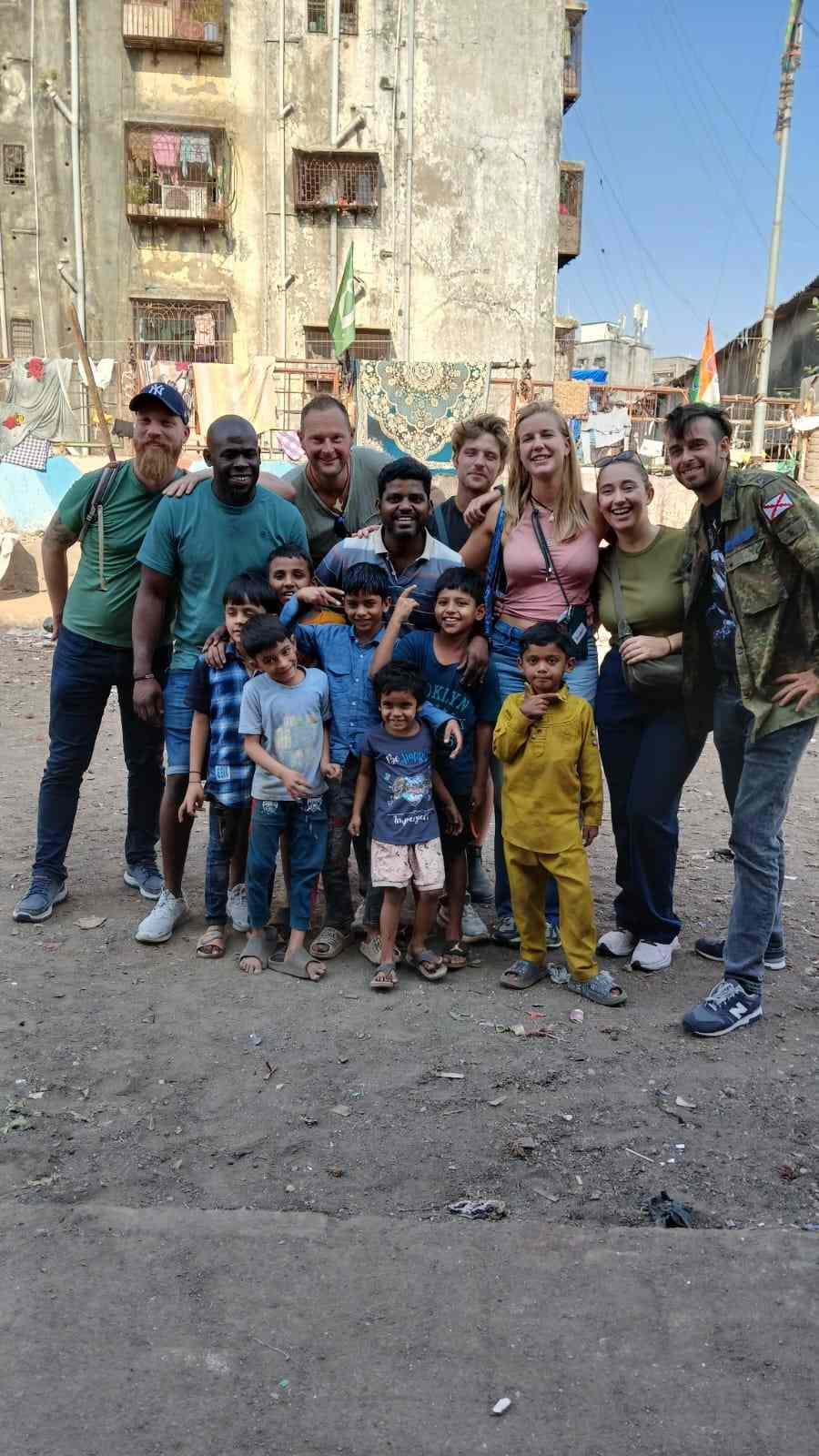
You will notice the smell changes every fifty metres: solvent near the plastics, woodsmoke near the kilns, frying food near a bakery, drains in places. You will notice how many children there are, and how normal everything is. People are working, arguing, cooking, getting haircuts, watching cricket. It is a neighbourhood, and it behaves like one.
It is also genuinely poor in ways that are not romantic. Sanitation is inadequate. Many families share toilets. Homes are small and hot, and a lot of them flood in the monsoon. Anyone who tells you Dharavi is simply a heartwarming story of resilience is skipping half of it.
Things people get wrong
That it is dangerous. It is not. Dharavi has a lower rate of violent crime than plenty of neighbourhoods with better addresses. Visitors are far more likely to be offered tea than troubled. We have written about this at length in our honest answer on whether it is safe to visit Dharavi.
That everyone here is unemployed. The opposite is true. Dharavi has close to full employment; the issue is the conditions and the wages, not the absence of work.
That it is one homogenous place. Dharavi contains dozens of distinct communities, languages, religions and trades, and neighbourhoods that differ completely from one another.
That Slumdog Millionaire is a documentary. It is a film. It got some texture right and a great deal wrong, and it shaped a global impression that residents have been correcting ever since.
The redevelopment project
You cannot write about Dharavi in 2026 without this. A large-scale redevelopment is under way, run through the Dharavi Redevelopment Project and the Slum Rehabilitation Authority with Adani as the executing developer, with a project cost reported at around Rs 95,790 crore and a completion target in the early 2030s. A door-to-door survey has been mapping every structure and resident to determine who qualifies for rehousing.
The stated plan is that eligible residents receive a free flat within the Dharavi area, with commercial units also rehoused. Supporters point to what that would mean: proper sanitation, safer buildings, secure tenure, and an end to conditions nobody should have to live in.
The concerns are equally real and widely reported. Eligibility depends on documentation and cut-off dates, and a large number of residents may not qualify for rehousing inside Dharavi; those found ineligible face relocation elsewhere. Many businesses here depend on being exactly where they are, next to their suppliers and buyers, and it is not obvious how a network of ground-floor workshops transfers into high-rise blocks. There have also been legal challenges and political disputes over how the contract was awarded.
We are not going to tell you what to think about it. Opinion inside Dharavi itself is genuinely divided: plenty of people want better housing and are hopeful, plenty are worried about losing their livelihood or their neighbours, and many are both at once. What we will say is that the place you would visit today is changing, and the conversations you have here now are not the ones you would have had five years ago.
Should you visit at all?
This is a fair question and it deserves a real answer rather than a defensive one.
The honest case against is that tourism in a poor neighbourhood can become spectacle: outsiders photographing people’s homes, treating a place where people live as an attraction, and leaving nothing behind. That criticism is legitimate, and some tours have earned it.
The case for is that the alternative — nobody comes, nobody sees, the stereotype stands unchallenged — does not help anyone here either. A visit done properly puts money into local hands, employs local guides, and sends people away with an accurate picture instead of a film-shaped one. Most visitors arrive expecting misery and leave talking about enterprise.
The difference is entirely in how it is done. If a tour treats residents as exhibits, it is exploitative. If it treats them as neighbours who happen to have visitors, it is not.
How to visit respectfully
Whether you come with us or with anyone else, this is the standard worth holding a tour to.
Go with a local guide. Someone from the community knows whose workshop it is, who is happy to be visited, and where not to take a group. Someone from outside does not.
Keep the group small. Fifteen people in a narrow lane is a procession, not a visit.
Do not photograph people or homes without asking. This is the single clearest line between a respectful visit and an intrusive one. Ask, accept no as an answer, and never photograph inside someone’s home uninvited. We run consent-first photography for exactly this reason.
Ask questions, and buy things. Talking to people is the point. Buying a pot in Kumbharwada or a bag from a leather shop puts money directly into the local economy.
Check where the money goes. Ask any operator directly who their guides are and how much stays in the community. A good answer is specific.
Do not hand money or sweets to children. It creates begging where there is none and undermines school attendance.
Practical details
When to go. Mornings are the most active for the industrial areas. October to March is the most comfortable weather. The monsoon, roughly June to September, makes the lanes wet and slippery, though it is also when the city feels most alive.
What to wear. Comfortable closed shoes you do not mind getting dirty, and modest clothing that covers shoulders and knees. You are walking through a residential neighbourhood, not a sight.
How long. Two to three hours covers the main industrial and residential areas at a sensible pace. Longer combinations exist if you want to add the rest of the city.
Cost. Ethical, small-group tours here generally start from around ₹1,000 per person. Be a little suspicious of anything far cheaper, and ask what the guide is actually paid.
If you want to see it with us
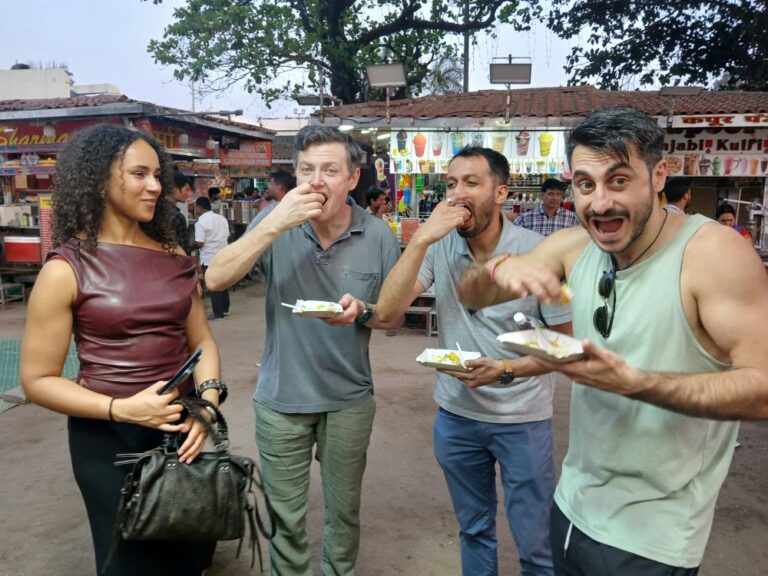
Our Dharavi slum tour is the core of what we do: a small group, a guide who grew up here, the recycling and pottery districts, the residential lanes, and time to actually talk to people. If you want to go deeper into the pottery quarter and share a meal with a family, there is the Dharavi pottery tour with a family meal. If you would rather see Dharavi alongside the rest of the city in one day, there is the Dharavi and Mumbai city tour, and if food is your way into a place, the Mumbai street food tour covers ground most visitors never reach. You can see all of them on our Mumbai slum tours page.
And if after reading this you decide Dharavi is not for you, that is a perfectly good outcome too. We would rather you skipped it than came for the wrong reasons.